Why life stories are important
Recording an individual’s history is crucial to adoptees, dementia patients and to anyone looking to honour and celebrate a loved one’s life. Karen Bamford explains how to get started.
As a celebrant, I write and tell people’s stories at funerals, memorial ceremonies, events to celebrate life and during the scattering of ashes. I have seen the power of life stories to comfort, unite and inspire.
I’m also an adoptive parent and have created life story books for the both my children that detail their unique journeys from birth until they joined our family. These books help them understand why they couldn’t stay with their birth families, record key events and explain the permanency of forever families.
Supporting people living with dementia
I learnt about the importance of life stories to people with dementia, thanks to Sage House, a community hub that brings local Dementia Support services together under one roof. This incredible charity, based in Tangmere, West Sussex, provides the latest support, information, advice and activities to those living with dementia and their families, across the county.
I met Jacquie Pond, education & learning development manager from Sage House, when she gave a presentation on understanding dementia at Merriman Grange Care Home, Worthing, in July.
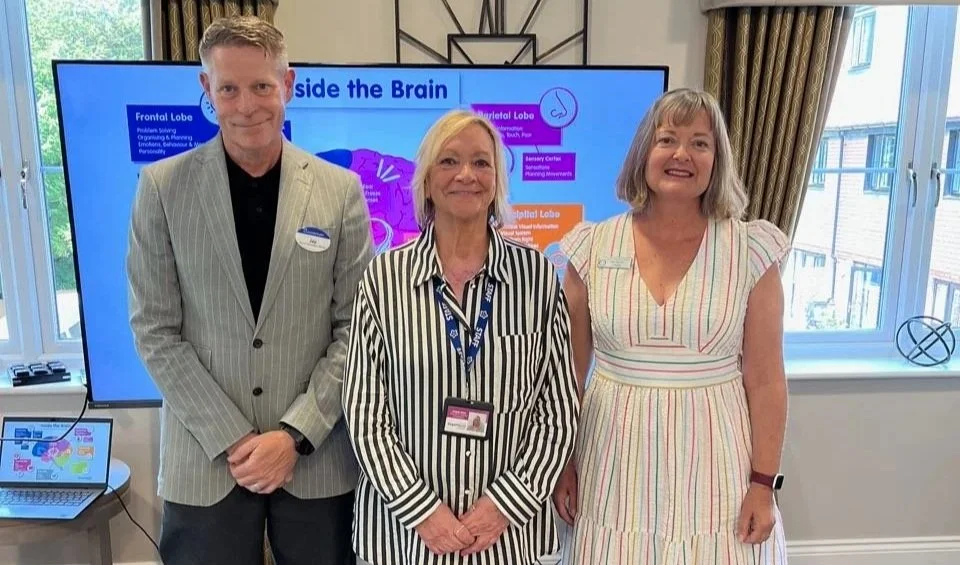
Picture: Jay Finch, homes admissions advisor, Merriman Grange; Jacquie Pond, education & learning development manager, Sage House; Karen Bamford celebrant
For the charity, life story work is a tool to enable carers to get to know someone better and provide better person-centred care for them. It is a personal document of key moments from the person’s life, a timeline of where they may have lived, worked or travelled and includes information about people who have been and still are important to them.
“It can enable the person living with dementia to maintain their identity and communicate their wishes. Life story work is not only beneficial in care situations but can be used as a form of therapeutic reminiscence with family members.
“Conversations around memories and significant life moments can be helpful in strengthening relationships, increasing confidence through self-identity and can bring comfort and reassurance to the person.”
The story can take the form of:
A book or journal
A photo album
A video journal
A memory box
Digital records
A life story can be created at any point in a person’s life but could become more challenging as the dementia progresses. Why not start your own or a loved one’s today?
Tips for learning about a person’s history
Ask simple, general questions and give the person time to think
Ask family and friends to provide their memories and help to fill any gaps
Use photos, music and memorabilia to encourage a person to talk about a particular time or event from their past
Try completing the document as a group or family reminiscence activity
Be sensitive about what the person shares and be mindful that they may not wish to document everything
Some events may trigger unpleasant or sad memories, and the person may be emotional but unable to explain why. Allow them to express themselves and validate their feelings. Try taking breaks or moving onto different topics if necessary.
Learn more about the services offered by Sage House.
I can write a life story for you or a loved me as part of advanced funeral planning. Please contact me to find out more.
